
Integrated AI Tool Positions Biodiversity Monitoring in the Hands of Local Indigenous Rainforest Experts
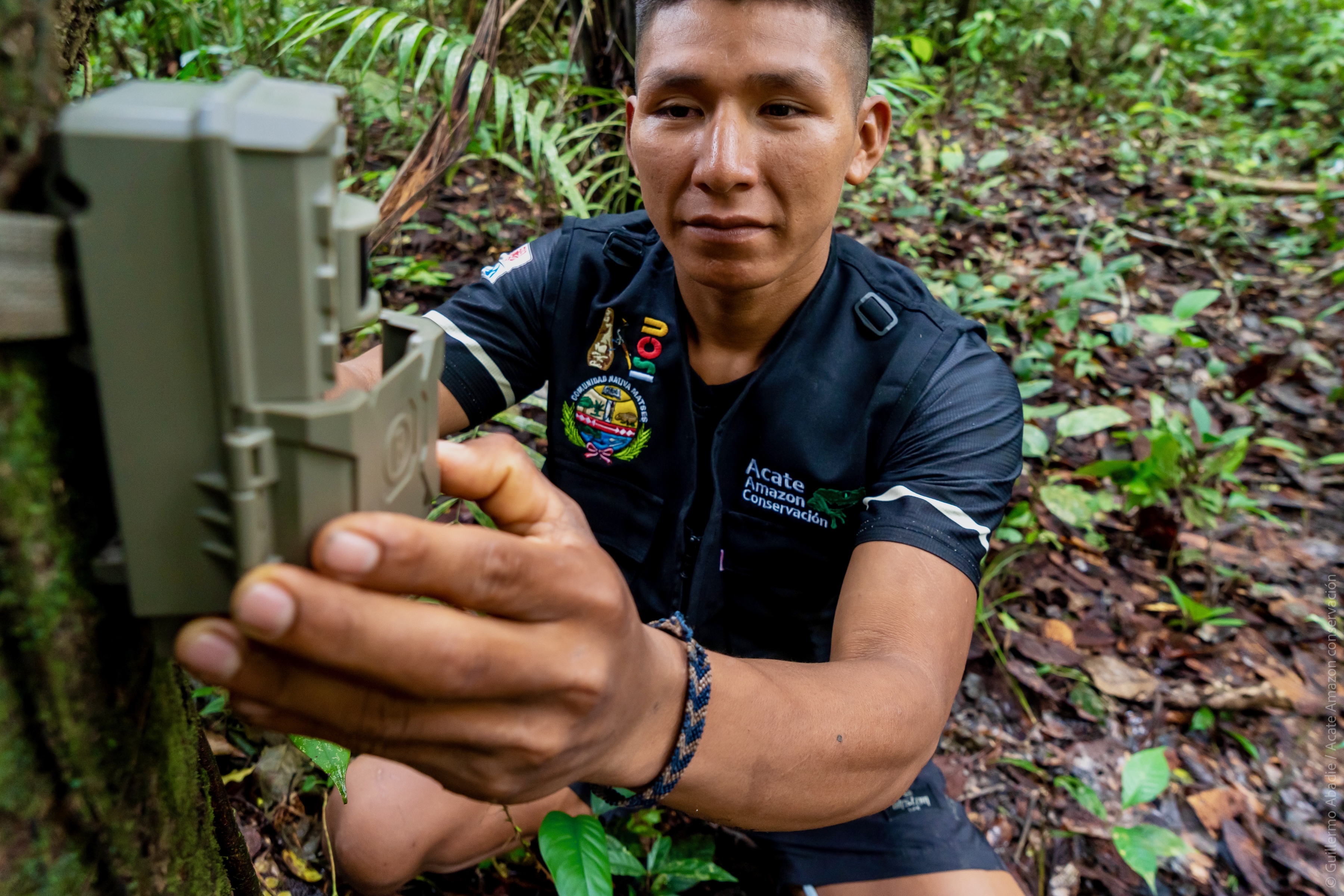
Indigenous-led biodiversity monitoring in the Amazon Rainforest
SentaAI addresses a major gap in tropical forest monitoring. Current satellite-based platforms detect and automate alerts for forest cover loss. Beneath the canopy, these remote platforms provide little, if any, information on biodiversity, animal population trends, or declines in ecological health. On-site rapid species inventories by teams of scientists are highly resource-intensive and usually reserved for baseline assessments.
The Matsés, like many Indigenous groups in the Amazon, sustain a deep understanding of their ecosystems, identifying more than 47 different types of rainforest habitats—far more than Western science recognizes. In this initiative, the Matsés use their intimate knowledge of rainforest microenvironments to strategically place monitoring devices, such as camera traps and bioacoustic recorders, to capture elusive and rarely glimpsed Amazonian species.
SentaAI enables continuous on-the-ground biodiversity monitoring by rapidly processing the massive volume of data generated by the monitoring devices to deliver highly accurate image recognition of Amazonian fauna. It achieves this by combining publicly available recognition systems with a custom machine learning workflow developed over two years. SentaAI is now being trained to identify bird, amphibian, and mammal vocalizations recorded in the Matsés ancestral rainforest.
Nearly half of the world’s tropical forests are protected within Indigenous lands. Acaté’s approach leverages AI to introduce efficient, locally led biodiversity monitoring within a major conservation corridor. Importantly, the approach centers conservation efforts and monitoring on the ground, recognizing local communities' expertise.
David Fleck, Ph.D.
Acaté Amazon Conservation
dfleck@acateamazon.org
Visit us on social media:
Facebook
Instagram
LinkedIn
X
YouTube
Other
Bluesky
Giant anteater (Myrmecophaga tridactyla) with pup, known to the Matsés Indigenous People as shaë, in the Amazon Rainforest of Peru.
Legal Disclaimer:
EIN Presswire provides this news content "as is" without warranty of any kind. We do not accept any responsibility or liability for the accuracy, content, images, videos, licenses, completeness, legality, or reliability of the information contained in this article. If you have any complaints or copyright issues related to this article, kindly contact the author above.
